An interview with Lucie Lajoux, CEO of Madame Beans.
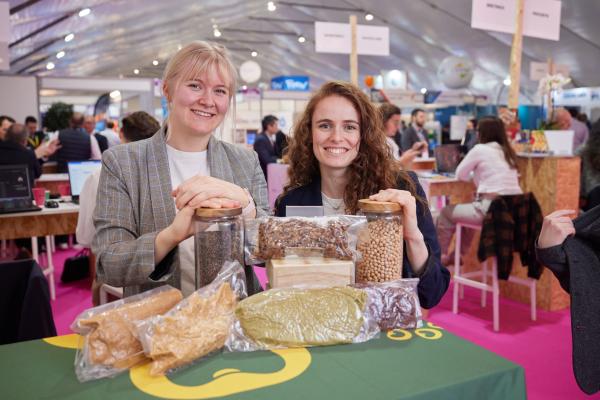
From student project to start-up: Lucie Lajoux, co-funder of Madame Beans, present us the start-up history and how their participation in Ecotrophelia had an impact in their professional journey. Today, Madame Beans is an established company that aim to make legumes accessible to everyone.
What is your product and what makes it innovative?
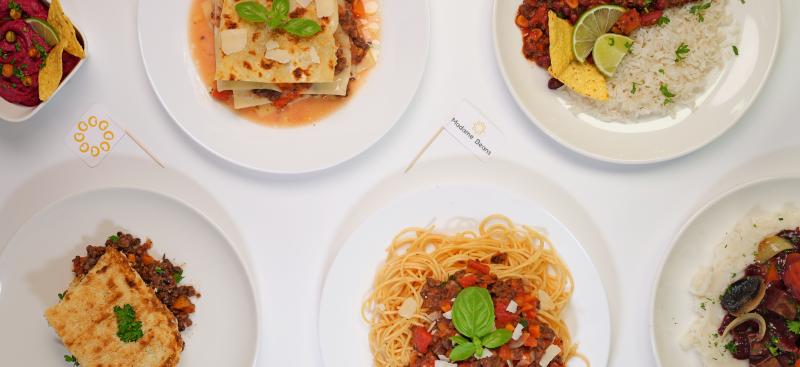
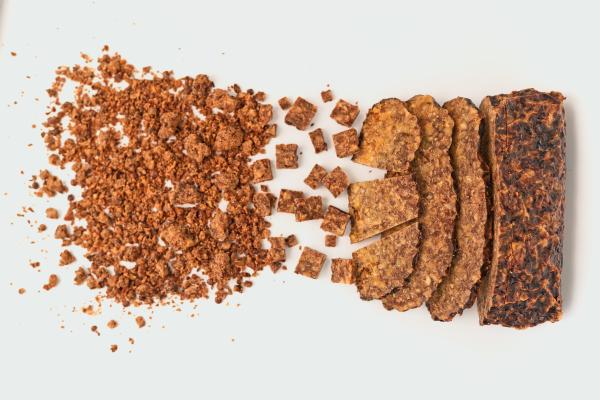
During the competition, we developed a product range composed of two complementary elements: La Bas’atout: a minimally processed culinary base made from green lentils and chickpeas, designed to be used in a wide variety of recipes, from starters to desserts, including vegetarian dishes. What makes this product innovative is its low level of processing, its carefully developed texture, and its high versatility. It helps food service professionals, particularly in collective catering, meet the requirements of the EGAlim law. An innovative aquafaba: produced from our manufacturing by-products, it addresses a dual challenge—valorizing side streams while offering an alternative to the functional properties of eggs, especially in foams and emulsions. This comprehensive approach, combining versatility, sustainability, and functional innovation, is what makes our project truly distinctive.
What inspired you to participate in Ecotrophelia?
We saw Ecotrophelia as a great opportunity to step out of our comfort zone by exploring new challenges related to food innovation. It was also, and above all, a chance to work on a topic that truly matters to us: contributing to the development of the French legume sector. Finally, Ecotrophelia is a genuine human adventure. For almost a year, we worked as a team on a concrete project, addressing all its aspects, from product design to its promotion.
Before the competition, did you imagine your project could become a real business?
Not necessarily. For Charlotte and me, the world of entrepreneurship was still largely unknown, and starting a business felt almost out of reach with our engineering background. However, we were confident that our product range had real market potential, as it was specifically designed to meet the needs expressed by professionals during various interviews and testing phases. As the competition progressed and we witnessed inspiring success stories, a small voice started to grow within us: “why not us?”
What are your core values and missions?
Our core values are simplicity, responsibility, and sharing. We strive to embed them in all our thinking and decision-making processes.
They guide us in fulfilling our mission: to make French legumes accessible, from professionals to consumers, for all dietary needs and at every stage of life.
What’s the difference between your Ecotrophelia prototype and the current market version?
The core concept has remained the same. After the competition, we worked closely with collective catering professionals to improve the product’s texture and adapt packaging formats so that it fully meets their technical and operational constraints.
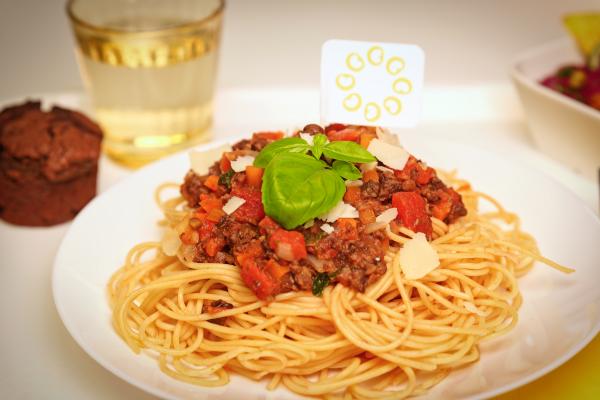
In addition, we expanded the product’s culinary universe by developing a variety of recipe applications, showcasing its versatility and making it easier for professionals to use in their daily practices.
What were the biggest challenges you faced in developing the brand?
One of the biggest challenges was transforming a student project into a credible and operational brand. This required us to structure our message, clarify our value proposition, and position ourselves consistently in the market.
We also had to balance innovation with real-world constraints by adapting our product to meet professionals’ technical requirements while staying true to our commitments to simplicity and sustainability.
Finally, building a strong brand identity took time: defining our universe, refining our messaging, and ensuring consistency between the product, its uses, and the values we aim to convey.
How did you fund your project in the early stages?
That’s the big question when starting out! We relied on several funding sources. First, we obtained student-entrepreneur status, which allowed us to benefit from free support through organizations such as Pépite and Enactus. This was extremely helpful in the early stages, especially to build a solid support network and structure our project.
We then quickly decided to take on jobs that were compatible with developing our business. For nearly a year and a half, we managed three roles simultaneously: students, employees, and founders of Madame Beans.
Following Ecotrophelia, we also took part in many competitions, which were highly valuable in moving the project forward and expanding our network. The prize money helped us finance the early stages of the project (R&D, travel, production, trademark registration, etc.).
Finally, we secured innovation-related grants. Thanks to these different sources of funding, we were able to manage every stage of development up to the creation of the company in May 2024, just a few months before receiving our first customer order.
What is your current company size?
Four years after Ecotrophelia and two years after launching the company, we have grown from two co-founders to a team of four employees.
We have been marketing La Bas’atout since January 2025, with very positive feedback from our clients. Today, we work with a wide range of customers, both directly with kitchens and through national distributors.
Are you still working with your original Ecotrophelia team?
Partly. Two of us from the original team decided to fully embark on this entrepreneurial journey and build the company.
Do you plan to internationalize your product?
Not in the short term. For now, we are fully focused on developing and establishing our product in the French market, in order to strengthen our business model and best meet local needs. Expanding internationally may be considered at a later stage, once these foundations are solid.
How do you continue to innovate today?
Legumes offer a wide scope for innovation, opening up many opportunities for our development.
We currently have several projects in development, which we hope to bring to life and reveal by 2027!
What are your next big goals in the coming years?
Our main goal for the coming years is to see La Bas’atout used in canteens all across France! More broadly, we aim to contribute to a lasting transformation of food practices in collective catering by making legumes more accessible, appealing, and easy to use on a daily basis
ABOUT MADAME BEANS
Founders: Lucie Lajoux and Charlotte Blin
Prizes: Ecotrophelia France 2022: Silver Award, Legume Innovation Award and Senior Nutrition Award
From: France
Website: www.madamebeans.fr
What is your opinion on food innovation today and tomorrow?
We believe that innovation should go hand in hand with simplicity and responsibility. Simplicity means using short, clear ingredient lists and controlled manufacturing processes. Responsibility involves making thoughtful choices to offer products that are both healthy and environmentally friendly.
Ultimately, we ask ourselves: could the greatest innovation of tomorrow be inspiring consumers to take the time to cook again?
What did Ecotrophelia bring you personally and professionally?
The Ecotrophelia competition pushed us to go beyond our limits and step out of our comfort zone. It was both an intense and demanding experience, before and during the competition week, where we had to perform on many different aspects: product development, marketing, booth organization, tastings, and pitching.
From a professional perspective, it enabled us to develop highly transversal skills by working on all aspects of a product, from R&D and production to quality and marketing.
On a personal level, the competition helped us build confidence in public speaking and gave us the courage to engage directly with our market and its users—testing our ideas, exchanging with stakeholders, and confronting real-world challenges.
What’s your best memory from the competition?
There are many great memories, but the most memorable one is undoubtedly the awards ceremony. Seeing the other projects and teams, we didn’t necessarily expect to win a prize… so receiving three was an incredible surprise!
It was a very emotional moment, as the pressure of the competition finally lifted. We shared this intense joy as a team, and also with our coaches, who had supported us throughout the entire journey.
Is there anything you missed during or after the competition?
Sleep, without a doubt! Jokes aside, we’ve rarely experienced the same level of collective energy and creative excitement as we did during the Ecotrophelia week.
It was an incredibly intense moment, driven by a unique dynamic between the teams. We also made some great connections there, and we’ve stayed in touch with several people ever since.
What would you say to future Ecotrophelia participants?
Don’t hesitate—go all in and make the most of every moment of the competition!
Any partnership or success you'd like to highlight?
We would like to extend a sincere thank you to all our partners who have supported us since the very beginning of our project: ESA, Angers Technopole, Initiative Anjou, Bpifrance, France 2030, France Active, LEGGO, Terres Univia, Groupe Even, Valorial, Le Village by CA, Ker Inno Végétal, Institut LYFE, as well as all the people and organizations who support us on a daily basis.
Their trust, guidance, and support have been essential in helping our project grow and reach each new stage of development.


